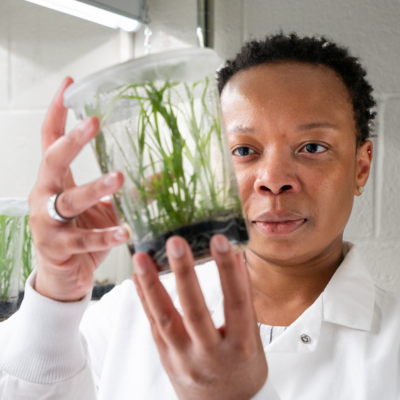
Plant Biology welcomes Dr. Chenxin Li
Molecular biologist looks to small compounds for big ideas
The Department of Plant Biology is excited to welcome molecular biologist Chenxin Li, PhD, as the newest member of our faculty.

Li joins MSU from the University of Georgia, which he joined as a postdoctoral researcher in 2021. Li earned a doctorate in Plant Biology from the University of California Davis in the same year.
Now, Li is taking up the Spartan mantle as an Assistant Professor of Plant Biology.
“We are thrilled to recruit Li to Plant Biology. He brings innovative and creative research approaches in molecular biology, adding significant strength to MSU's world-class community of plant biologists,” said Andrea Case, chairperson of the department of Plant Biology.
“Li is already a very well-rounded faculty member for his career stage, with formal
experience in teaching, research mentoring, and grantsmanship. We are very lucky to
have Li join our faculty and are here to support him as he begins his faculty career.”
Why Go Green?
"MSU struck me as a place full of opportunities,” Li explained, noting that the University is home to a “stellar” community of plant biologists.
“As a ‘post-genomics era’ plant molecular biologist, I am excited to explore how I can apply new genomics and molecular techniques to the array of diverse plant species being studied at MSU.”
MSU’s world-class research infrastructure, including plant growth facilities and the Mass Spectrometry and Metabolomics Core – both which have benefitted from recent upgrades— are attractive assets for researchers, Li explained.
It isn’t just the tools and toys that are exciting to Li, however.
“In terms of what about the plant sciences community at MSU excites me: MSU is a great place to do plant biology research in general, and it is especially great for plant biochemistry research, as evident by the concentration of excellent plant biochemists at MSU.”
The department of Plant Biology was particularly appealing, Li explains, because of the opportunities for research collaborations, and on account of the program’s high-caliber graduate students.
These cutting-edge resources, combined with a diverse group of talented collaborators, offer promising potential for future plant science research.
A look into the Li Lab
Li's research is focused on using single-cell approaches to decode how plant cells develop unique capabilities, and the underlying regulatory factors that determine cells’ ultimate forms and functions.
Insights into these processes could help scientists transform plants into molecular factories that produce critical compounds — like those used in medicines and cosmetics — many of which are currently derived from fossil fuels.
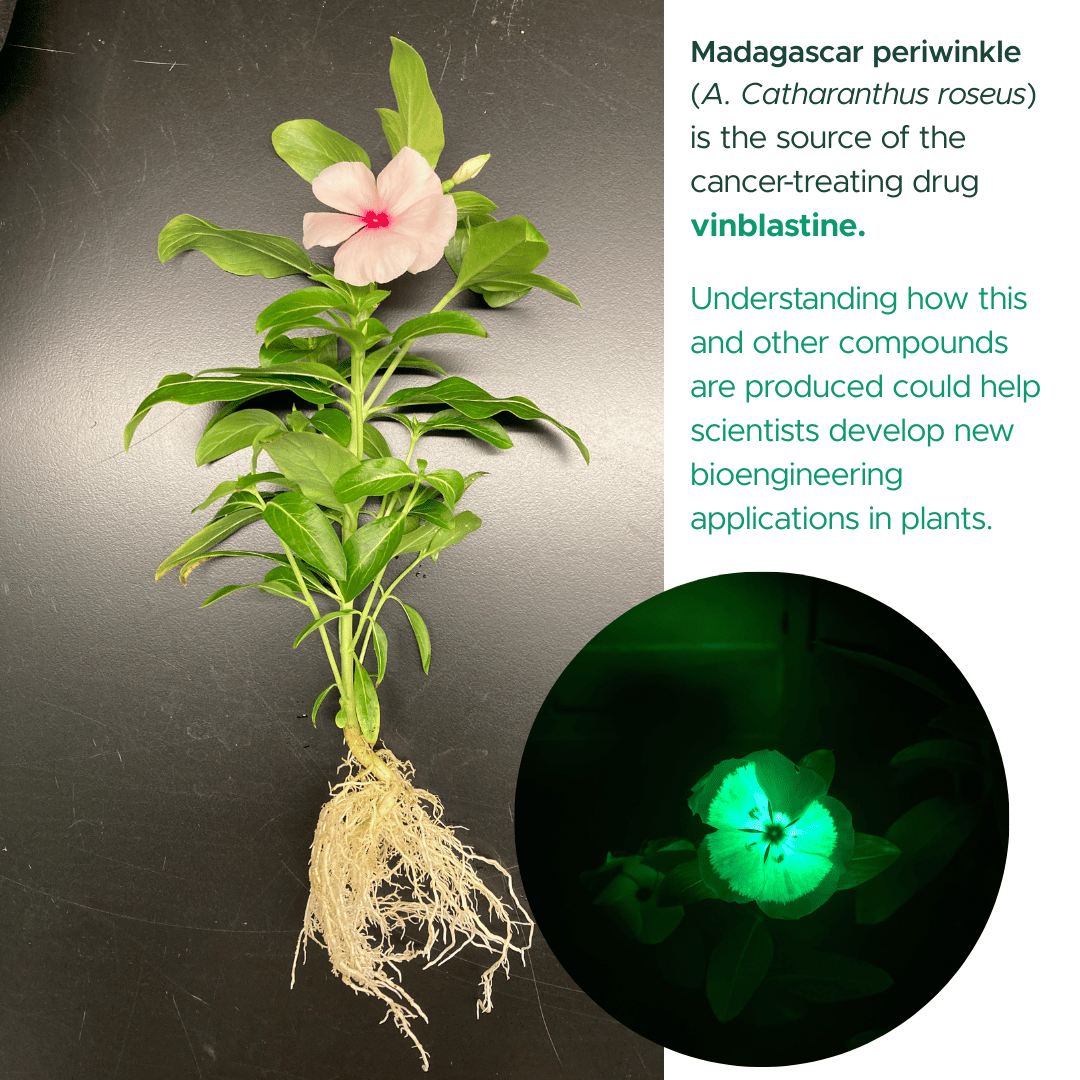
So-called “precursor molecules” can be produced in plants, and genetic modification could help researchers exploit this ability to produce a dizzying array of useful compounds.
However, not every part of a plant – from cells to tissues – is capable of producing the same compounds. Li also aims to understand how the developmental paths that cells follow determine their capabilities. He hopes that, by understanding how cells develop, they can be reprogrammed to produce certain desirable traits or compounds.
Individual plant cells also possess the incredible potential to develop into independent organisms. In animals, only zygotes – the product of a fertilized egg – can do the same. However, in most plants, this process must be instigated by a combination of hormones. Li is exploring this phenomenon using plants within the genus Kalanchoe – such as Mother of Thousands – which produce entirely new plants along the edges of their leaves. Li hopes that better understanding the mechanisms by which individual plant cells can morph into whole organisms will yield insights useful for various applications in biotechnology.
Li is the latest faculty member recruited to PLB through the Plant Science Excellence faculty hiring initiative, a five-year recruitment campaign designed to bring together new talent and current MSU experts around key research priorities.
“MSU is developing capacities in single cell technologies for plant biology,” said Li. “I pioneered in applying single cell techniques in studying how biosynthetic genes are regulated in different cell types, an area that I will build upon in my independent lab."
To learn more about Li’s research, or to keep up to date with openings in the lab, visit the Li Lab’s website.